

Ukrainian Gardens in Wartime
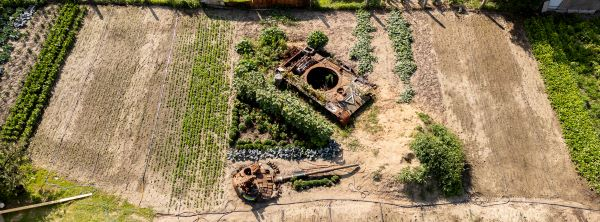
There is nothing more poignant and arresting than an image of a garden partially destroyed by tanks or missiles with flowers still blooming amidst the chaos. At the height of the war around Kyiv in 2022, people fled the city to relatives or to their dachas in the countryside, only to find that these villages were also being targeted, some occupied by Russian troops. Photographer Sergii Polezhaka began a personal mission to document these war-torn gardens, highlighting the way that life continues despite the war. An abandoned tank sits in the middle of a market garden, neat rows of vegetables all around it; cherry tree blossom adorns trees in the municipal park in Kyiv, trenches carefully dug around the roots of the trees to preserve them; and a carefully-tended rose garden stands out in stark contrast to the abject ruins of a bombed building right next to it. These images tell the story of a resilient nation and the hope of new life. In Ukraine, where the words land, soil, country, and place are all expressed by the same word - zemlya - these gardens can offer a new lens through which to view - and perhaps better understand - the ongoing war.
Showing these beautiful and haunting images for the first time, Sergii and his wife Maria, also a garden photographer, will be in conversation with Clare Foster about the project and their experience of living through the Ukrainian war Sergii says: 'In my project, these places transform from a voiceless background into the main subject. It’s a collective portrait of Ukrainian society, bearing visible scars from past traumas such as the Great Ukrainian Famine or centuries of being deprived of the right to private property. The aftermath of these experiences now echoes in the ways Ukrainians share food with strangers in their destroyed villages, begin demining fields before the battle dust settles, or refuse to leave their homes.'
50% of ticket sales will be donated to the Memory Garden, on the grounds of the National Museum of Folk Architecture and Life of Ukraine in Pyrohiv for those who have lost loved ones in the war.
Select below
There is nothing more poignant and arresting than an image of a garden partially destroyed by tanks or missiles with flowers still blooming amidst the chaos. At the height of the war around Kyiv in 2022, people fled the city to relatives or to their dachas in the countryside, only to find that these villages were also being targeted, some occupied by Russian troops. Photographer Sergii Polezhaka began a personal mission to document these war-torn gardens, highlighting the way that life continues despite the war. An abandoned tank sits in the middle of a market garden, neat rows of vegetables all around it; cherry tree blossom adorns trees in the municipal park in Kyiv, trenches carefully dug around the roots of the trees to preserve them; and a carefully-tended rose garden stands out in stark contrast to the abject ruins of a bombed building right next to it. These images tell the story of a resilient nation and the hope of new life. In Ukraine, where the words land, soil, country, and place are all expressed by the same word - zemlya - these gardens can offer a new lens through which to view - and perhaps better understand - the ongoing war.
Showing these beautiful and haunting images for the first time, Sergii and his wife Maria, also a garden photographer, will be in conversation with Clare Foster about the project and their experience of living through the Ukrainian war Sergii says: 'In my project, these places transform from a voiceless background into the main subject. It’s a collective portrait of Ukrainian society, bearing visible scars from past traumas such as the Great Ukrainian Famine or centuries of being deprived of the right to private property. The aftermath of these experiences now echoes in the ways Ukrainians share food with strangers in their destroyed villages, begin demining fields before the battle dust settles, or refuse to leave their homes.'
50% of ticket sales will be donated to the Memory Garden, on the grounds of the National Museum of Folk Architecture and Life of Ukraine in Pyrohiv for those who have lost loved ones in the war.
Our payments are processed using : Payyo